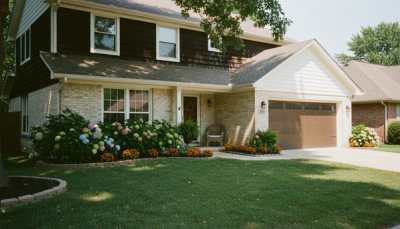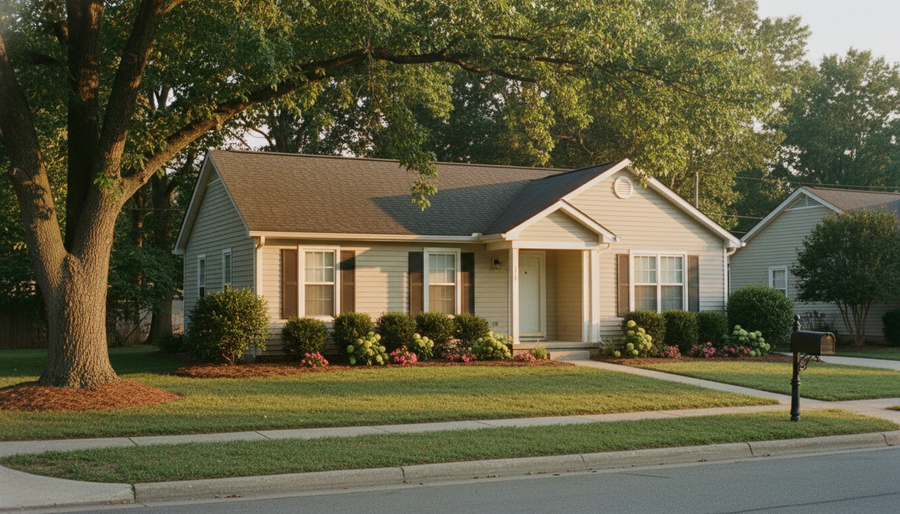
If you're over 60 and you've owned your home for decades, chances are it's your single largest asset. The average homeowner over 62 has more than $300,000 in home equity. That's not just a number on paper — it's real wealth that can fund your retirement, cover healthcare costs, help your grandchildren, or simply give you peace of mind.
But equity is only useful if you can access it. Here are the main ways to tap your home equity in retirement, along with the pros, cons, and risks of each.
Option 1: Sell and Downsize
The most straightforward way to access your equity is to sell the home and buy something smaller and less expensive. If you sell a $450,000 home and buy a $250,000 condo, you walk away with roughly $200,000 in cash (minus closing costs and agent fees). That money goes directly into your retirement fund.
Pros: clean, simple, and you reduce your ongoing housing costs at the same time. Cons: you have to move, which is a big undertaking. But if your home is too large for your current needs, downsizing solves two problems at once.
Option 2: Home Equity Line of Credit (HELOC)
A HELOC is a revolving line of credit secured by your home. You borrow what you need, when you need it, and only pay interest on what you've drawn. Most HELOCs have a 10-year draw period followed by a 20-year repayment period. Current HELOC rates typically run 7–9%.
Pros: flexible, you keep your home, and you only borrow what you need. Cons: variable interest rates mean your payments can increase. And if you can't repay, you risk losing your home. HELOCs work best for specific, planned expenses — not as a long-term income supplement.
Option 3: Cash-Out Refinance
A cash-out refinance replaces your existing mortgage with a larger one, and you pocket the difference. If your home is worth $400,000 and you owe $100,000, you could refinance for $250,000 and receive $150,000 in cash. You'll have a new mortgage with new monthly payments.
Pros: fixed interest rate and predictable payments. Cons: you're taking on new debt in retirement, closing costs run 2–5% of the loan amount, and you'll be making mortgage payments for another 15–30 years. This works best if you're refinancing at a significantly lower rate than your current mortgage.
Option 4: Reverse Mortgage
A reverse mortgage lets you borrow against your equity with no monthly payments. The loan comes due when you sell, move out, or pass away. You can receive funds as a lump sum, monthly payments, or a line of credit. You must be 62 or older and have significant equity.
Pros: no monthly payments, tax-free proceeds, and you stay in your home. Cons: high upfront costs, interest accrues and grows your loan balance, and there may be little equity left for your heirs. See our full guide on reverse mortgage pros and cons for a detailed breakdown.
Option 5: Sell for Cash
If you want to access your full equity quickly and simply, selling your home for cash is the fastest path. Cash buyers close in 7–14 days, purchase as-is, and you walk away with your equity minus the offer discount (typically 75–90% of market value). This works well when speed, simplicity, or health circumstances make a traditional sale impractical.
Which Option Is Right for You?
The answer depends on your goals. Need ongoing income? A HELOC or reverse mortgage provides access without selling. Want a clean break? Sell and downsize. Need cash fast? A cash sale is the quickest path. Planning to stay in your home? A reverse mortgage or HELOC lets you access equity while staying put.
Whatever you choose, avoid tapping your equity for discretionary spending. This is your safety net. Use it for healthcare, housing transitions, or genuine financial needs — not vacations or gifts you can't afford. Once the equity is gone, it's gone.
The Bottom Line
Your home equity is a powerful retirement asset, but it requires careful stewardship. Understand your options, compare the costs, and consult a financial advisor who doesn't earn a commission on the product they recommend. The right strategy protects your equity while giving you access to the funds you need to live comfortably.