Every article about moving to a smaller home focuses on the positives: less maintenance, lower costs, more freedom. And all of that is true. But there's a period of adjustment that nobody prepares you for — and a handful of surprises that catch almost everyone off guard.
Here's what people who've actually done it wish they'd known before moving day.
You Will Miss the Space — At First
Even if you hated maintaining your old house, your body remembers the room. The first few weeks in a smaller home can feel claustrophobic, especially if you're used to spreading out. The kitchen feels too small when you're cooking. The living room feels crowded with fewer furniture pieces than you're used to.
This passes. Within two to three months, most people report that their new space feels normal. You adjust your routines, figure out where things go, and stop reaching for cabinets that aren't there anymore. But don't panic in week one — the discomfort is temporary.
You Brought Too Much Stuff
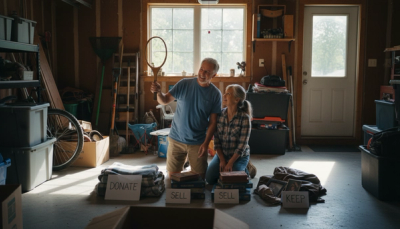
Almost everyone who downsizes brings too much. You were ruthless during decluttering — or so you thought. But when you're unpacking boxes in a 1,200-square-foot condo, you realize that 'ruthless' wasn't ruthless enough.
Expect to do a second round of decluttering within the first three months after your move. Once you're living in the space, it becomes obvious which items don't fit — literally or figuratively. That's normal. It's actually easier to declutter once you can see the space limitations in real life instead of in the abstract.
Storage Requires Strategy
In a larger home, you could throw things in the basement, the attic, or the spare bedroom. A smaller home demands intentional storage. Every closet, cabinet, and shelf needs to earn its keep.
Invest in good storage solutions early. Shelf risers, under-bed bins, over-door organizers, and vertical storage can dramatically increase your usable space. Measure everything before you buy. And adopt a one-in-one-out rule — every time something new comes into the house, something old leaves.
Your Utility Bills Will Drop — A Lot
This is one of the pleasant surprises. Heating and cooling a 1,200-square-foot home costs a fraction of what it cost for 2,500 square feet. Many downsizers report utility savings of 30–50%. That alone can add up to $150–$300 per month depending on your climate and old home size.
You'll Spend More Time Outside Your Home
When your home is smaller, you naturally seek out other spaces. You go to the library, the coffee shop, the park, the community center. You walk more. You accept more invitations. For many retirees, this is actually the best part of downsizing — it pushes you out into the world instead of rattling around in a half-empty house.
The Neighborhood Matters More Than the House
In a large home, you can be self-contained — entertainment room, home office, big kitchen for hosting. In a smaller home, your neighborhood becomes an extension of your living space. A walkable neighborhood with coffee shops, restaurants, parks, and a library can make a 1,000-square-foot apartment feel more spacious than a 2,500-square-foot house in a subdivision where you need to drive everywhere.
Your Relationships May Change
If you're moving with a partner, be prepared for an adjustment. You had separate spaces in your old home — a home office, a craft room, different floors to retreat to. In a smaller home, you're sharing more of your daily space. Talk about this before you move. Designate personal areas, even if they're small. Respect each other's need for alone time.
The Bottom Line
Moving to a smaller home is one of the best decisions many retirees make — but the transition has a learning curve. Give yourself grace during the first few months, do a second declutter once you're settled, and invest in making your new space work efficiently. The payoff — financial, practical, and emotional — is worth the short-term adjustment.