After 30 or 40 years in the same home, you've accumulated a lot. Not just stuff — memories. Every object carries a story, a person, a moment. That's why decluttering feels so much harder than it should. You're not just deciding whether to keep a set of china. You're deciding whether to let go of the Thanksgiving dinners you served on it.
Here's the truth that makes decluttering possible: the memories aren't in the objects. They're in you. Letting go of the thing doesn't erase the memory. And keeping everything doesn't preserve it — it just fills your closets.
Start Small, Start Easy
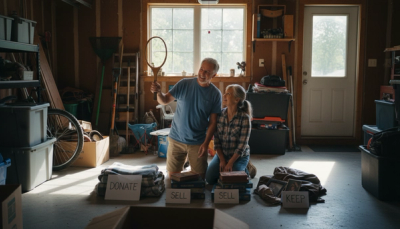
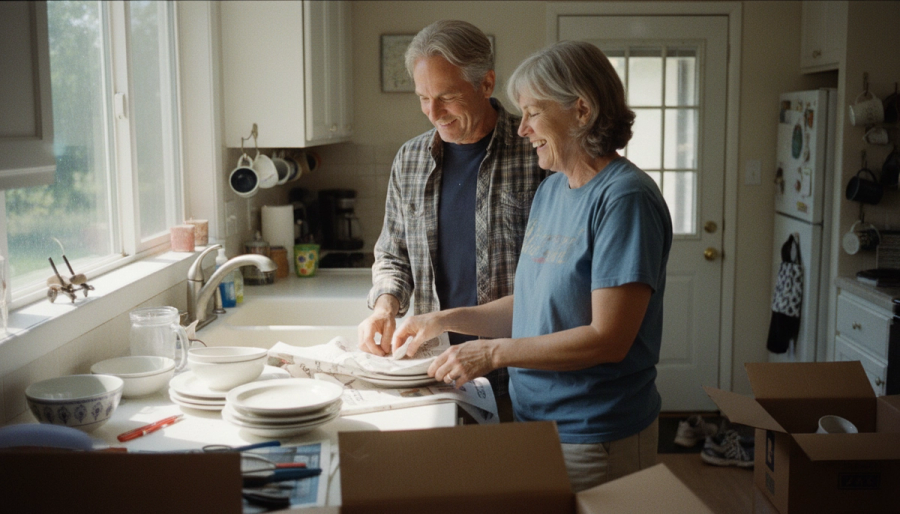
Don't begin with the photo albums or your late spouse's belongings. Start with the areas that carry the least emotional weight. The linen closet. The garage. Under the bathroom sink. The junk drawer in the kitchen. These spaces are full of things you can part with quickly — expired medications, duplicate tools, old cleaning supplies, broken items you kept meaning to fix.
Early wins build momentum. Once you've cleared three closets and filled a trunk with donations, tackling the harder rooms feels less overwhelming.
The Three-Box Method
For each item, you have three choices: Keep it, Give it away, or Let it go. Keep means it's coming with you — it serves a purpose or brings you genuine joy. Give means a family member, friend, or charity gets it. Let it go means it's time — sell, recycle, or trash.
If you're stuck on an item, ask yourself: Would I buy this today? If the answer is no, you have your answer. Another helpful question: Am I keeping this because I love it, or because I feel guilty getting rid of it? Guilt is not a good reason to fill your next home with things you don't need.
Dealing with Sentimental Items
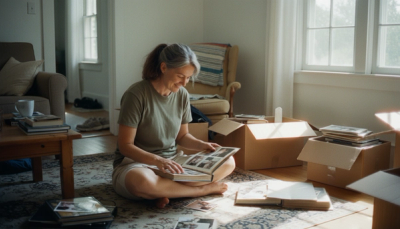
This is the hard part. Your grandmother's quilt. Your children's school artwork. Boxes of letters from decades ago. You can't keep everything, but you don't have to throw it all away either.
Photograph items before you let them go. A digital photo takes up zero space and preserves the visual memory. Create a memory box — one box per family member or per decade — and keep only the most meaningful items. Give heirlooms to the family members who will appreciate them most. Your daughter might love having your mother's recipe box even if you can't take it with you.
For children's artwork, scan or photograph the best pieces and create a digital album or photo book. You get to keep the memories in a format that fits on a shelf instead of filling an attic.
When to Get Help
If the task feels physically overwhelming — too much bending, lifting, or climbing — ask for help. Adult children, friends, or neighbors may be happy to assist if you ask directly. Be specific: 'Can you help me clear out the garage Saturday morning?' works better than 'I need help sometime.'
Professional help is also available. Senior move managers specialize in exactly this — they help sort, pack, and organize with patience and sensitivity. The National Association of Senior & Specialty Move Managers (NASMM) can help you find one near you. Professional organizers who specialize in seniors are another option. They typically charge $50–$100 per hour and can make the process dramatically less stressful.
What to Do with Everything
Donate to local charities, Habitat for Humanity ReStore, veteran organizations, or women's shelters. Many will pick up directly from your home. Sell valuable items through estate sales, consignment shops, or online marketplaces. Hold a garage sale for smaller items — your neighbors will do the advertising for you.
For items that can't be donated or sold, schedule a bulk pickup with your trash service or rent a dumpster for a weekend. Getting it all out at once feels better than slowly chipping away.
The Bottom Line
Decluttering is a gift to yourself and to your family. It lightens your load, simplifies your move, and ensures the things you keep are the things that truly matter. Take it one room at a time, be compassionate with yourself, and remember — you're not erasing your past. You're making room for your future.