Why Downsizing After Retirement Might Be Your Best Move
If you've been living in the same home for 20 or 30 years, the idea of leaving can feel overwhelming. But for many retirees, downsizing isn't about giving something up — it's about gaining something back. Freedom, financial flexibility, and a home that actually fits the life you're living now.
The numbers often make the case on their own. The average American homeowner over 62 has more than $300,000 in home equity. If your kids have moved out and you're heating, cooling, insuring, and maintaining more space than you need, downsizing can unlock a significant portion of that equity while dramatically reducing your monthly expenses.
But downsizing is more than a financial decision. It touches on identity, memory, and what "home" means. That's why it's worth approaching it thoughtfully — not just with a calculator, but with a plan that accounts for the emotional, practical, and financial dimensions.
The Financial Blueprint: What You Actually Save
The financial benefits of downsizing go beyond a smaller mortgage payment. Here's where the savings add up:
Property taxes drop when you move to a smaller or less expensive home. In many states, the difference can be $2,000–$5,000 per year. Utility costs — heating, cooling, electricity, water — typically decrease by 25–40% in a smaller home. Insurance premiums are lower on smaller properties with less square footage and fewer rooms. Maintenance and repairs cost less. A smaller home means a smaller roof, fewer windows, less landscaping, and fewer things that break. HOA or condo fees, if applicable, often include maintenance tasks you'd otherwise pay for separately.
On top of the monthly savings, selling a larger home and buying smaller can free up tens of thousands — or even hundreds of thousands — in cash. That money can fund travel, supplement retirement income, cover healthcare costs, or simply provide peace of mind.
One important note: if you've lived in your home for at least two of the last five years, you may be able to exclude up to $250,000 in capital gains from the sale ($500,000 for married couples) from federal taxes. Talk to a tax professional about your specific situation before selling.
Navigating the Emotional Side of Downsizing
Let's be honest — this is where most people get stuck. Your home isn't just a building. It's where you raised your kids, hosted holidays, built a life. Letting go of that is genuinely hard, and no amount of financial logic makes the emotional part easy.
Here are some strategies that help:
Separate the memories from the objects. The dining table where your family gathered isn't what made those moments special — the people did. Take photos of items you can't keep. Create a memory book or digital archive. The memories travel with you even if the furniture doesn't.
Give yourself permission to grieve. It's normal to feel sadness, even when you know downsizing is the right decision. Acknowledge the loss without letting it paralyze you.
Involve your family early. Adult children often have opinions about the family home and its contents. Have the conversation before you start packing. Ask if there are specific items they'd like to keep. This prevents conflict later and can turn the process into a shared experience rather than a solo burden.
Start with the easy rooms. Don't begin with the attic full of photo albums. Start with the garage, the guest room, or the linen closet. Build momentum with spaces that don't carry as much emotional weight.
Focus on what you're moving toward, not just what you're leaving behind. A smaller home can mean less cleaning, less yard work, more time for the things you actually enjoy, and a fresh start in a space that reflects who you are now — not who you were 25 years ago.
Practical Steps for Decluttering and Organizing
Decluttering is the most time-consuming part of downsizing, and most people underestimate how long it takes. Give yourself at least 2–3 months if possible.
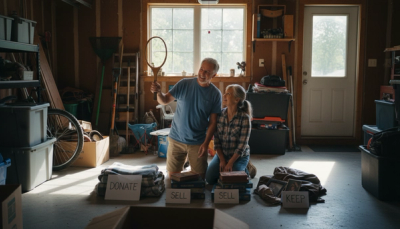
The four-box method works well: for each item, decide if it goes in the Keep, Donate, Sell, or Discard box. Be honest with yourself. If you haven't used something in two years, you probably won't use it in your next home either.
Measure your new space before you start packing. Know exactly what furniture will fit and what won't. There's nothing worse than moving a couch 200 miles only to discover it doesn't fit through the door.
Digitize what you can. Old photos, documents, letters, and records can be scanned and stored digitally. This preserves the content without the physical bulk.
Consider hiring a senior move manager. These professionals specialize in helping older adults downsize. They handle everything from sorting and packing to coordinating the move and setting up your new home. The National Association of Senior & Specialty Move Managers (NASMM) maintains a directory of certified professionals.
For items worth selling, estate sale companies can handle the logistics and typically take 30–40% of the proceeds. For everything else, local charities, Habitat for Humanity ReStores, and veteran organizations will often pick up donations directly from your home.
Choosing Your Next Home: Options Worth Considering
Downsizing doesn't mean you have to move into a tiny apartment. There are more options than ever for retirees looking to rightsize their living situation:
A smaller single-family home in the same area keeps you close to your community, doctors, and friends while reducing space and costs. This is the most popular choice for retirees who want to downsize without dramatically changing their lifestyle.
A condo or townhome eliminates exterior maintenance, landscaping, and often includes amenities like a pool, gym, or clubhouse. Just be sure to factor in HOA fees and understand the rules before buying.
A 55+ active adult community offers a built-in social network, organized activities, and homes designed for aging in place — single-story layouts, wider doorways, walk-in showers. These communities range from modest to luxury.
Renting is worth considering too, especially if you're not sure where you want to land long-term. Selling your home and renting for a year gives you flexibility to try a new city or neighborhood before committing.
Moving closer to family is a common reason seniors downsize. If your kids and grandkids live in another state, downsizing can be the catalyst for a move that puts you closer to the people who matter most.
The Logistics of Selling and Moving
Selling a home you've lived in for decades is different from selling a home you've owned for five years. Here's how to approach it:
Get your home's value assessed before you list. A comparative market analysis from a local real estate agent is free and gives you a realistic starting point. You can also request a cash offer if you want to skip the traditional listing process — this is often faster and requires no repairs or staging.
Choose an agent who works with seniors. Some real estate agents specialize in senior transitions and understand the unique emotional and logistical needs of older sellers. Ask for references and look for designations like the Seniors Real Estate Specialist (SRES) certification.
Be realistic about repairs. You don't need to renovate your kitchen to sell your home, but addressing obvious issues — a leaky faucet, broken window, or peeling paint — can make a meaningful difference in how buyers perceive the property. If you'd rather not deal with any of it, a cash offer lets you sell as-is.
Plan your move carefully. Book movers at least 4–6 weeks in advance, especially if you're moving during peak season (May through September). Get at least three quotes. If you're moving long distance, verify that your mover is licensed and insured through the Federal Motor Carrier Safety Administration.
Common Downsizing Mistakes to Avoid
Moving too fast without a plan. Downsizing works best when you give yourself time to sort, decide, and process. Rushing leads to regret — either keeping too much or throwing away things you wish you'd saved.
Underestimating the cost of moving. Between movers, temporary storage, cleaning, and miscellaneous expenses, a move can cost $3,000–$10,000 or more. Budget for it.
Buying a new home before selling the old one. Carrying two properties is expensive and stressful. If possible, sell first — or at minimum, make your purchase contingent on the sale of your current home.
Ignoring the emotional impact. This is a major life transition, not just a real estate transaction. Give yourself grace, lean on family and friends, and don't hesitate to talk to a counselor if the process feels overwhelming.
Choosing a home that doesn't work for aging. Think ahead 10–15 years. Can you manage stairs? Is the bathroom accessible? Is the home close to medical facilities, grocery stores, and community resources? A home that works at 65 should still work at 80.
Life After Downsizing: What to Expect
Most people who downsize report feeling relieved within a few months. The initial adjustment can be bumpy — a smaller kitchen, less storage, a new neighborhood to learn. But the reduced stress of maintaining a large home, the financial breathing room, and the simplicity of a right-sized space tend to outweigh the trade-offs.
Use the transition as an opportunity to redesign your daily life. With less house to manage, you have more time. More time for hobbies, volunteering, travel, grandkids, or simply sitting on the porch with a cup of coffee and nowhere you need to be.
Downsizing isn't the end of a chapter — it's the beginning of one. And when it's done thoughtfully, it's one of the most empowering decisions you can make in retirement.